It's 9pm, you have one idea you believe in, a laptop, and no camera, crew or budget for either. You've watched somebody else post the version of that idea and get traction with it, and now you're trying to work out which format they really used.
That's a workflow question more than a creative one. The creator archetype examples below aren't a personality quiz. Each one is a production system: a specific audience, a repeatable path from script to finished video using AI tools, and one failure point that kills channels built on that format.
Pick the format where you already understand the audience. Everything after that is process. The people who stall usually chose a format they found interesting and discovered six weeks later that they had nothing left to say to the room they'd built.
Here they are: the faceless explainer, the ambient music loop, the AI music video artist, the UGC ad creator, the story short-form channel, the animated mascot, the repurposer, and the product demo. Each entry covers what the audience expects, how to build the video, and where it breaks.
Table of Contents
- 1. Faceless Explainer Channel
- 2. Faceless Ambient or Lo-fi Music Channel
- 3. AI Music Video and Visualizer Artist
- 4. UGC-Style Product Ad Creator
- 5. Story and Narration Short-Form Creator
- 6. Brand Mascot and Animated Character Creator
- 7. Long-Form to Short-Form Repurposing Creator
- 8. Screen-Based Product Demo and Tutorial Creator
- How the eight creator archetypes compare
- Choosing the archetype that fits your first AI video channel
1. Faceless Explainer Channel
A faceless explainer channel publishes educational video on one topic (history, finance, biology, psychology) with narration over stock footage, diagrams, or generated scenes. The audience arrives to learn one specific thing and leaves with a fact they can repeat at dinner. Kurzgesagt – In a Nutshell and TED-Ed set the visual bar for the format: narration carries the argument, animation carries the mood, and no host appears on screen.
The workflow is closer to a research desk than a film set. That's what makes it survivable for one person.

Supply is the problem. Adobe's Future of Creativity study estimated 303 million creators worldwide in 2022, after adding more than 165 million people in two years, and put creators at roughly one in four people. Your competition isn't the five channels you watch. It's a category growing faster than any single niche audience.
Script first, visuals second
Write the full narration in a document before generating a single frame. One claim per sentence, one source per claim, and a rhythm you can read aloud without stumbling.
- Generate in blocks: split the script into 20 to 30 second beats and generate visuals per beat, so the image matches the sentence in front of it.
- Fix the voice: choose one voice, keep it for a year. Voice changes read as channel changes.
- Build a thumbnail template: same font, same palette, same composition on every upload.
- Put sources in the description: it protects you, and it's the first thing commenters check.
The failure point is producing visuals before the script exists. Generated footage is easy, so people generate first and then write connective tissue between clips. The result feels like a montage and holds nobody. Script density is the product; visuals are packaging.
If you're still comparing tools, the workflow breakdowns on Revid's blog cover the script-to-video step for this format in more detail.
2. Faceless Ambient or Lo-fi Music Channel
The output is audio. The video is a loop. A lo-fi or ambient channel publishes 30-minute to multi-hour mixes under a static or slowly moving scene (a bedroom, rain on glass, a fireplace), aimed at students, remote workers, and people trying to fall asleep. Lofi Girl built the template and remains the reference point; sleep and rain channels are the long tail.
This isn't a casual tier of the platform. Epidemic Sound's 2024 report surveyed 1,500 monetizing content creators and found 54.9% identified as full-time creators. Assume the channels you're up against treat publishing as a job.
The loop is the whole product
Check before you scale: if you can't produce a receipt for a track or a visual, don't upload it. One claim can demonetize hours of runtime.
Start with a 40 to 60 minute program you own outright, either composed or licensed for commercial long-form use. Set a consistent loudness across the whole mix so viewers don't reach for the volume slider. Then build the loop.
- Make the seam invisible: cut the loop at a matched waveform point, not at a round number, so there's no audible restart.
- Title by mood, not genre: study, sleep, rainy night, deep focus are search phrases; "ambient opus no. 4" isn't.
- Ship themed playlists: rain, winter, late night, exam week. Playlists are the retention mechanism on a channel with no host.
- Keep the visual cheap and still: heavy animation on a 3-hour video invites scrutiny and comment-section complaints about motion.
The failure point is a visible restart. A loop point at 3:14 that drops back to silence pulls people out of the state the channel exists to create. The second failure is rights. Visuals pulled from a stock account tied to a personal email, or music licensed only for personal use, can take the whole channel down without warning.
3. AI Music Video and Visualizer Artist
This one starts with a finished song. Independent musicians who have a track and no video budget use generated scenes, characters, or abstract motion to give it a visual life on YouTube, TikTok and Instagram. The song is the anchor. The visuals illustrate its mood and story rather than competing with it.
The commercial ground keeps rising. The Japan Creator Economy Association estimated the country's domestic creator-economy market at 1.8696 trillion yen in 2023, a 13.0% increase on 2022. The video budget, though, usually still comes out of the artist's own pocket.
A song is a loop of motifs, which is exactly what generated visuals do well.

Build to the song's map, not the visuals' map
Mark the structure before you generate anything: intro, verse, chorus, bridge, outro, with timestamps. Choose three or four recurring images (a car at night, a specific jacket, a color that only appears in the chorus). Then generate 8 to 16 shots and cut on the beat.
- Test at chorus length first: a 30-second clip in the style you're considering tells you more than a storyboard does.
- Render vertical and horizontal: the 9:16 cut with the hook is what gets discovery; the 16:9 upload is what the existing audience expects.
- Make a Canvas loop: an 8-second vertical cycle for Spotify gives the track presentation inside the app.
- Disclose generated visuals: platform rules and audience trust both point the same way.
The failure point is visuals that ignore the song. A generated sequence that peaks in the second verse and idles during the chorus makes the track feel weaker than it is. The fix is mechanical: cut the visual beats to the arrangement, and let the chorus look different from everything around it.
4. UGC-Style Product Ad Creator
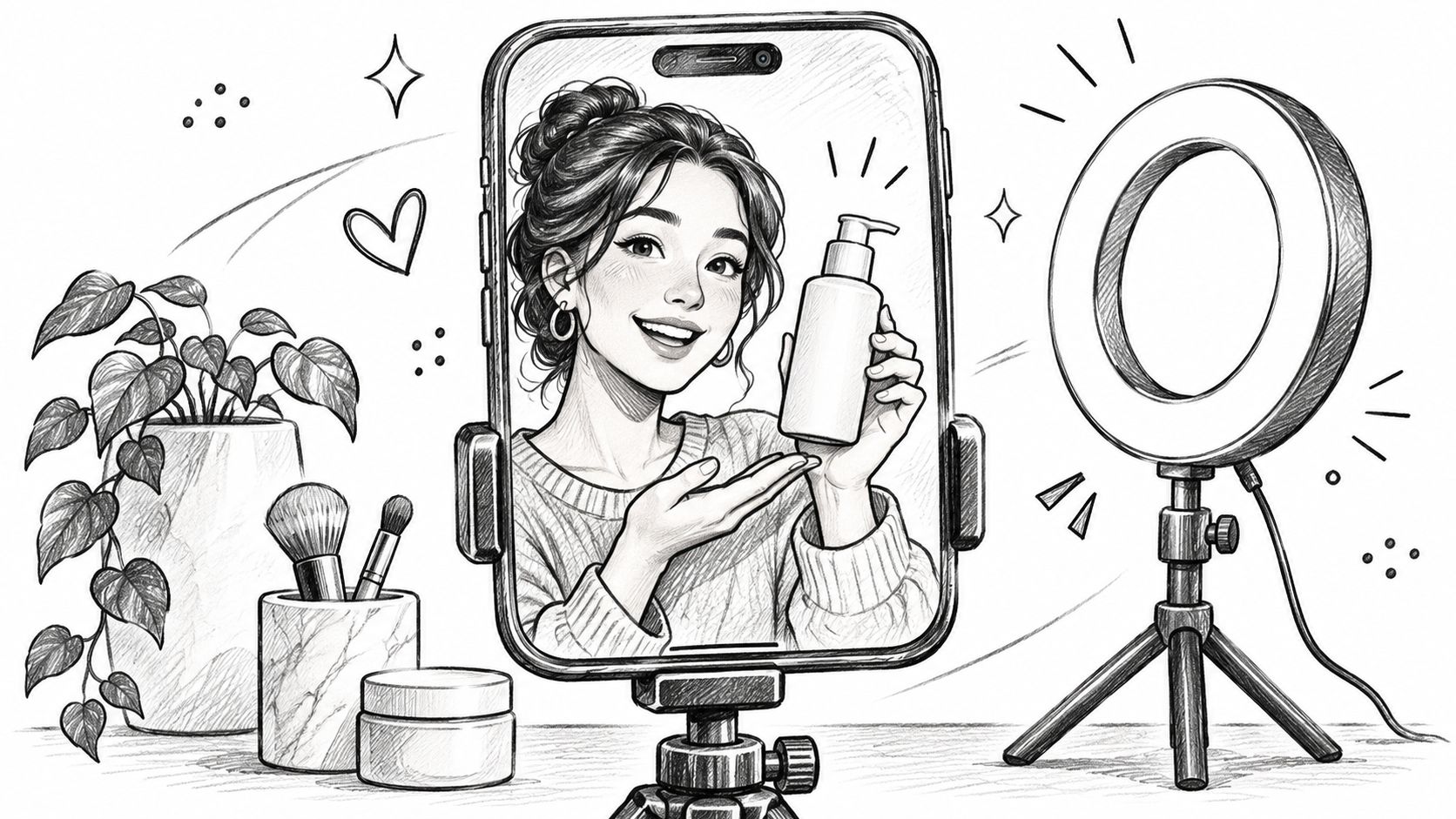
These are short ads that look like a phone-shot testimonial or unboxing. A real person, a stock presenter, or an AI presenter holds the product, says something plausible, and shows it working. The audience is cold traffic scrolling a feed; the job is to stop the thumb and survive the first second.
Tiering matters more than volume. The Nike INVINCIBLE campaign case study reports that across 33 creators, macro creators were used for conversion while micro creators extended reach, with a 7.38% add-to-wishlist rate against a stated 1.23x benchmark and macro creators beating micro creators on conversion by 50%. Treat those as directional agency numbers, not universal norms, and copy the structure: give each creator tier a measurable job.
One body script, five hooks
Write the body once, then produce three to five openers that attack the problem from different angles: the skeptic, the before-and-after, the specific objection ("you've tried the cheap one, and the reason it didn't work").
- Keep it 15 to 25 seconds: hook, product in frame within two seconds, one demonstration, one call to action.
- Caption everything: most feed views are silent, and captions carry the claim.
- Show the product close up: generated scenes drift toward mood shots; buyers need to see the object.
- Refresh every two to three weeks: a winning ad decays, and the fatigue is faster on small budgets.
The failure point is a claim you can't stand behind, or an invented testimonial. That's a legal and platform risk, and it's also the fastest way to lose the account behind the ad. The second failure is the synthetic presenter tell: a mouth that doesn't match the audio. It reads as fake in the first second, before the pitch even starts.
Before you spend on a tool, it's worth reading what other buyers found. Revid reviews collected from Trustpilot are a useful calibration on what the output looks like in an ad context.
5. Story and Narration Short-Form Creator
True crime, Reddit-style narratives, and serialized fiction in vertical video. Voiceover, text on screen, background footage, one narrative arc per clip. The audience won't give you more than three seconds to prove something is happening.
Platform concentration is the strategic fact. In 2024, CreatorIQ and Sapio Research found 68% of surveyed creators regularly made content on TikTok, while 67% regularly made content on Instagram. That's where this format lives, and it's where the algorithm decides whether part two gets made.
The first line is the format
Write the opening line as the most dramatic sentence in the story, then work backwards. Number the parts so viewers can find the next one.
- Keep parts to 45 to 60 seconds: the ending should cut mid-tension, not at a resolution.
- Use text on screen for names, dates and quotes: viewers re-read them, which raises watch time.
- Vary the background footage: repeating the same three clips signals low effort faster than a plain background would.
- Write original scripts or work from licensed or public-domain material: adapting someone else's story is a rights problem, not a creative shortcut.
The failure point is factual and legal exposure. Real cases involve real people, and a detail you got wrong can be defamatory. Fact-check every name, date and outcome before publishing, and keep a note of the source for each one.
The quieter failure is narration. A flat generated voice reading a dramatic story drains the tension out of it. Read the script aloud yourself once; the sentences that make you stumble are the ones to rewrite.
6. Brand Mascot and Animated Character Creator
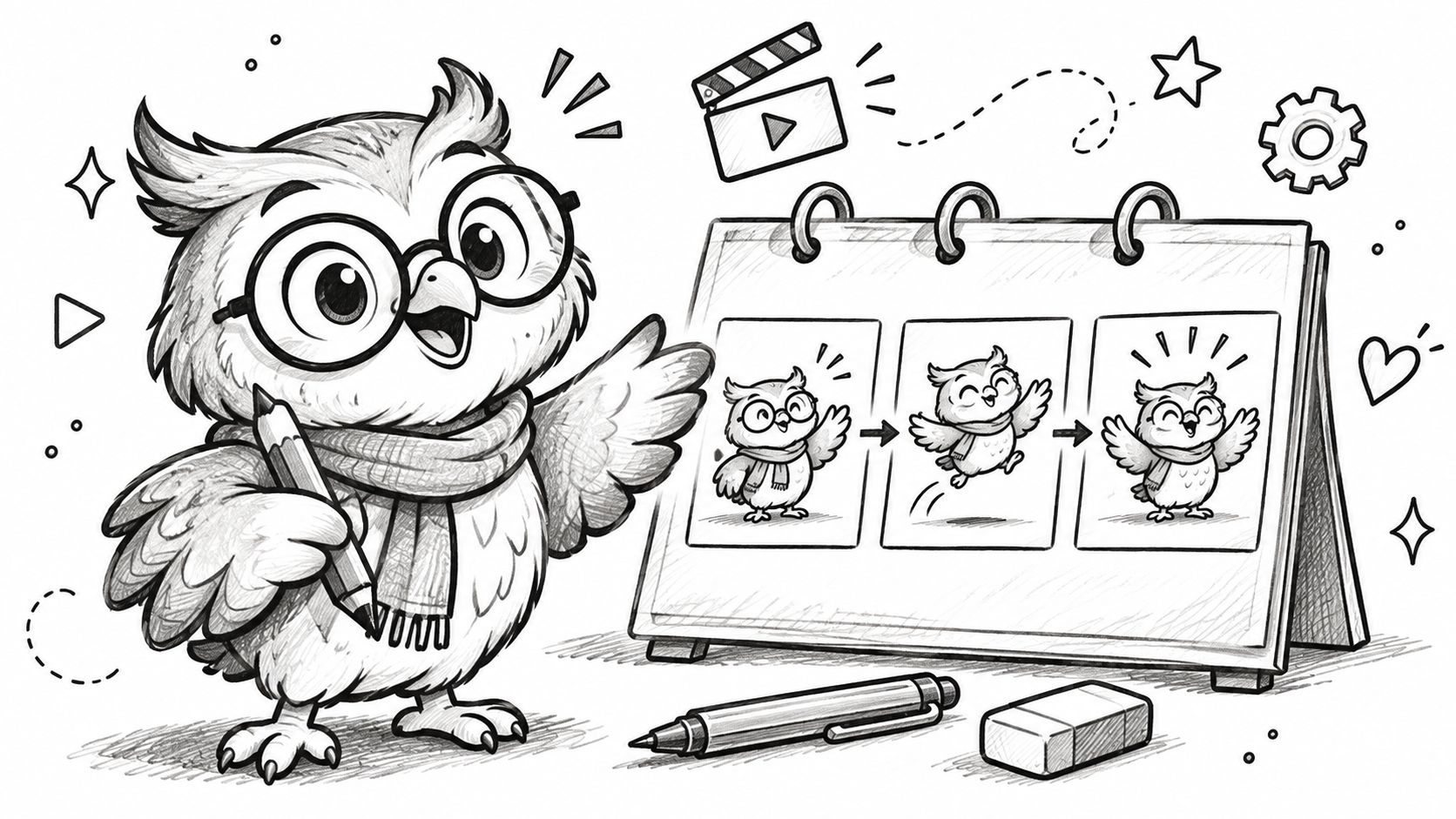
A recurring animated character becomes the face of a channel or brand, so nobody has to appear on camera. Duolingo's owl, Duo, is the clearest modern case: a mascot that carries humor across TikTok, YouTube, and social posts, and gives the product a personality people follow on purpose.
The mechanics are borrowed from brand strategy. HubSpot's analysis of brand archetypes reads Fishwife as a Creator archetype built on originality, visual language and self-expression, applied consistently enough to make a low-interest tinned-fish category culturally recognizable beyond its existing buyers. That's the lesson for a channel: an archetype is a production system, not a vibe.
Lock the character sheet before the first episode
A mascot is a design asset before it's a content format. Build the asset sheet, then write episodes around it.
Define personality, voice, vocabulary, and three running jokes. Keep a reference sheet with approved poses, colors and outfits, and feed those references into every generation.
- Fix the palette: two or three colors, used everywhere, including thumbnails and the profile image.
- Write in episode units: a repeating structure (the mascot tries something, fails, returns) gives people a reason to come back.
- Test the humor small: one joke format, five posts, then decide whether to scale it.
- Apply the same grammar to everything: packaging, captions, motion treatment, and sound should all read as the same character.
The failure point is drift. Generate the same character across twenty clips without references and you get twenty slightly different faces, and the recognition you were building evaporates. The second failure is having no running storyline: a mascot with nothing to do is just a logo with animation on top.
7. Long-Form to Short-Form Repurposing Creator
A podcast, webinar, interview, or long YouTube video can supply several short clips. The audience is people who may skip the full conversation but will watch a focused moment. AI tools can now find candidate moments; a human still has to decide which ones are worth publishing.
The editor's job is selection
Start with clean audio and a decent microphone. Captions can clarify speech, but they cannot fix hard-to-understand recording.
- Transcribe first: Scan the transcript for complete, useful moments before reviewing the timeline.
- Use AI to flag candidates, then cull hard: A shortlist is only a starting point. Keep the clips that make sense on their own.
- Cut on a complete thought: Include enough setup for the point to stand without the previous twenty minutes.
- Add hook text above the speaker: The first on-screen line should make the clip's subject clear.
- Link back to the full episode: Add the episode in the pinned comment and description.
The common failure is starting mid-thought. Automated tools may select a punchy conclusion while missing the setup that gives it meaning. If viewers cannot follow the point immediately, they scroll.
A second failure is changing what the speaker meant. Cutting a qualifier can turn a careful statement into an assertion the guest never made. Preserve the speaker's meaning, even when a shorter edit would sound sharper.
8. Screen-Based Product Demo and Tutorial Creator
Demo and tutorial channels answer one question per video and show the interface while doing it. Software companies publish them on YouTube and LinkedIn; independent reviewers make them for buyers comparing tools. Here's the format working as intended.
The audience is unusually valuable, because the people watching are about to spend money. Sprout Social's estimate of the creator economy put it at $250 billion in 2025, with approximately 50 million creators worldwide, and a meaningful share of those creators are actively shopping for tools.
Answer the question in the title
Start with the exact question, such as how credits work, how to cancel, or what happens when a generation fails. Then show it on screen.
- Show the product: the current interface, the current price, the current limits.
- Date the video: "recorded March 2026" in the description saves you from silent staleness.
- Cover the annoying parts: refunds, failed generations, export restrictions. Those are the queries with buying intent behind them.
- Link the primary source: official documentation or the original review, so viewers can verify the claim.
- Retire old videos: if the product changed, re-record or unpublish. A wrong price on screen costs you credibility with the exact viewer who was ready to buy.
The failure point is drift between what you show and what the buyer sees at checkout. Somebody watches a demo, signs up, and finds a different interface or a limit that wasn't mentioned. That single mismatch undoes the goodwill the whole video built.
Buyer-written accounts of a tool are worth pairing with your own testing. Revid's Product Hunt reviews are a reasonable example of that kind of evidence: what people said after using it, not what the launch page claimed.
How the eight creator archetypes compare
| Archetype | Best for | Typical format | Main risk |
|---|---|---|---|
| Faceless Explainer Channel | Creators starting an informational channel | Narrated 8–20 minute videos with stock, animated, or AI visuals | Factual errors, generic visuals, or repetition can weaken credibility and monetization |
| Faceless Ambient or Lo-fi Music Channel | Musicians and creators building long-form audio channels | Hours-long music loops with ambient visuals | Copyright claims and a crowded market |
| AI Music Video and Visualizer Artist | Musicians seeking affordable music visuals | Beat-synced generated scenes, lyric videos, or looping visualizers | Inconsistent visuals and unclear commercial usage rights |
| UGC-Style Product Ad Creator | Small businesses and marketers making short-form ads | Vertical 15–45 second product demos with a hook and call to action | Synthetic presenters can feel inauthentic, and unsupported claims can mislead viewers |
| Story and Narration Short-Form Creator | Creators making vertical stories for Shorts and TikTok | 30-second to 3-minute narrated videos with captions and background footage | Copyright issues, weak originality, or errors about real people and events |
| Brand Mascot and Animated Character Creator | Brands and creators building a recognizable character | Short episodic videos featuring a recurring animated mascot | Character inconsistency or repetitive stories can lose audience interest |
| Long-Form to Short-Form Repurposing Creator | Creators and businesses with existing long-form content | 15–90 second vertical clips with captions and hooks | Clips can lose context or misrepresent the original speaker |
| Screen-Based Product Demo and Tutorial Creator | Brands and reviewers answering how-to and buying questions | Screen-recorded tutorials with narration, captions, and step-by-step demos | Outdated screens or omitted limitations can make a video feel unreliable |
Choosing the archetype that fits your first AI video channel
Choose the format for an audience you understand and can serve consistently. A channel built around a clear viewer need is easier to sustain than one chosen only because its examples look impressive. The test is whether you can keep producing useful scripts when inspiration runs low.
Set the workflow before publishing: write the hook or script, generate visuals in blocks that match it, check factual and rights-related details, then watch the finished video on a phone with the sound off. If viewers drop away, inspect the writing before adding more visual effects.
The Creative Class Group survey of 20 countries estimates the creator economy at $104 billion in 2021 and projects it will reach $480 billion by 2027. Those figures describe the market, not the odds of any individual channel succeeding.
Commit to one format for four to six weeks before adding another. Track average view duration, end-screen click-through, returning viewers, and saves. Strong retention through the first 30 seconds followed by a drop at two minutes points to a weak middle. Early exits suggest the hook or thumbnail is failing to deliver a clear promise.
Revid can turn a prompt into a script, visuals, and voice in one generation, which can shorten production for explainers, story shorts, and visualizers. You still choose the niche, audience promise, and claims worth publishing under your name.
Before publishing, watch the video at normal speed on its intended platform. Check that the visuals support the script, the captions make sense without sound, and the finished piece delivers what the opening promised.
If you're weighing an AI video tool before committing to a channel, Revid Reviews gathers public reviews of Revid from Trustpilot, X, and Product Hunt, linked to their original sources. It also covers practical buyer questions about legitimacy, credits, cancellation and refunds, and comparisons with Higgsfield, InVideo, Captions, HeyGen, and Pictory. Start with Revid Reviews as you decide which archetype to build.