A laptop, a script, a voice file, and no camera. That setup is enough to publish ten short videos in one afternoon. The nine formats below are the ones that make the afternoon worth repeating. Each one breaks down into the production workflow, the engagement tactic that makes the video travel, and the trade-off a new creator has to accept, plus one move you can run this week.
The money behind the work is real. Goldman Sachs valued the creator economy at about $250 billion in 2023 and projected it could approach $480 billion by 2027, a near doubling reported by Stacker. The share that reaches individual creators is thinner. Only a small minority earn six-figure incomes, so the format you choose matters more than how many hours you put in.
Each example covers four things: what the creator makes, the tactic that holds the audience, the trade-off a newcomer has to swallow, and one move you can apply this week. None of them needs a studio. Several force a decision about whether your face, your voice, or neither appears on screen. Pick that constraint first. It decides the edit, the posting pace, and what you can repeat without burning out.
Table of Contents
- 1. Faceless Educational Explainer Channels Built with AI Video Tools
- 2. Lo-Fi and Ambient Music Stream Channels
- 3. AI-Assisted Music Video Creators for Independent Artists
- 4. UGC-Style Creators for Short-Form Video Ads
- 5. Comedy and Silent Skit Creators on TikTok
- 6. Virtual Influencers
- 7. Science and Engineering Creators on YouTube
- 8. Mass-Scale Challenge and Entertainment Channels
- 9. Short-Form Clip Repurposing Creators
- How the nine digital creator formats compare
- Pick one format and test it this month
1. Faceless Educational Explainer Channels Built with AI Video Tools

Kurzgesagt – In a Nutshell is the reference model: narrated animation, a fixed visual language, no presenter, and a script doing the heavy lifting. The channel proves a faceless brand can carry authority when the research is visible on screen.
Script first, then scenes
Write the voiceover in full and fact-check every claim against a primary source before you generate a single frame. Then split the script into beats and produce one visual per beat, whether that's animation, stock footage, a generated scene, or a text card. The expensive part is now cheap. Adobe and The Harris Poll reported in 2025 that 86% of surveyed global creators use creative generative AI (Adobe), and turning a paragraph into a narrated, captioned scene is the most common use of it.
Consistency is what makes a faceless channel recognizable. Same palette, same typeface, same narrator voice across fifty videos. Cut three to five Shorts from every long upload, each one a self-contained question with the answer held back for two seconds.
The trade-off: nobody subscribes for you. There's no personality to license, no face for a sponsor to build a campaign around, and platform rules on mass-produced and synthetic content tighten every year.
- Lock the motif: pick colors, font, and narrator once, then never improvise.
- Add original commentary: a generated explainer with no point of view is replaceable in an afternoon.
- Read the policy before scaling: check the platform's rules on AI-generated and mass-produced content before you go daily.
If you're weighing tools, the Revid Reviews blog covers how the generators differ on scripts, voice options, and export formats.
2. Lo-Fi and Ambient Music Stream Channels
Lofi Girl built one of YouTube's most-watched channels from a drawn character, a desk, and hours of music. The image barely changes. That's the format, not a limitation.
Build the loop, then reuse it
Create a visual loop of 60 seconds to 3 minutes and extend it for as long as the stream runs. Match the last frame to the first so the seam is invisible, and strip out any frame-level motion that would jump on repeat. Music comes from your own production or properly licensed tracks. Licensing is where these channels die: one Content ID claim can strip monetization from a stream that's been running for months.
Titles should name the moment rather than the genre. "Rainy Night Study Mix" tells a viewer when to press play. "Chill Beats Vol. 4" tells them nothing. Scheduled streams train returning viewers, and a lightly moderated live chat keeps the room warm without demanding your attention.
An ambient channel is a utility, not a personality. Run it like a radio station with a schedule and a mood, and judge every upload by session length rather than likes.
- Batch your visuals: one weekend of loops can cover a year of streams.
- Publish on a fixed schedule: the same hours each week beat sporadic long sessions.
- Watch the first thirty seconds: if retention drops there, the opening track is wrong.
The trade-off is arithmetic. Cost per hour is low and revenue per hour is lower, and the audience you build rarely buys anything beyond the stream itself.

3. AI-Assisted Music Video Creators for Independent Artists
A finished track can be ready before the video budget is. AI tools let independent artists turn a musical idea into a visual release asset, but the video still needs a clear creative direction.
Plan shots against the song's structure
Map visuals to the intro, verse, chorus, and bridge before generating anything. Give the chorus the strongest image, use movement to carry the verses, and change the visual at the bridge to renew attention. Keep one color palette and visual motif throughout so the result feels like a video, not a sequence of unrelated clips.
Render the chorus first. It is the best test of whether the visual concept fits the track. If it does, build out the other sections. Keep the prompt and project files so you can revise the imagery without starting over.
Export a 9:16 version for TikTok and Instagram Reels, plus a 16:9 version for YouTube. Check each platform's rules for disclosing synthetic media before publishing.
A short teaser gives the full video another route to discovery. Cut a 30-second clip from the finished piece and publish it before the release. A full video with no warm-up or follow-up asset has fewer chances to reach listeners.
- Use one visual idea: A single concept gives the video coherence.
- Test the chorus first: Confirm the imagery works with the track before generating the full video.
- Keep project files and prompts: They make revisions easier and document how the visuals were created.
If you're comparing generators, Revid Reviews collects public Product Hunt reviews of Revid's music-to-video feature, each linked to its original.
4. UGC-Style Creators for Short-Form Video Ads
A brand sends a product. You film it on a kitchen counter the same week, cut several openings, and hand files to a media buyer running paid traffic. The creator is a production vendor first. Audience size matters less than whether the footage holds and converts.
The hook is the product
Write five to ten hooks and run each as its own ad. Testing them inside one video hides which line stopped the scroll. The first frame has to be visually loud and state the problem immediately. Paid feeds move fast, and a slow open gets skipped before the product appears.
Use real product footage wherever you can. A synthetic product shot saves a reshoot. It also costs trust, because viewers notice when the item never sat in someone's hands.
Judge the campaign by comparing paid creator assets with the account's existing video benchmarks on click-through, watch time, and completion. Report organic results and paid results separately. Set the baseline before launch so a change in those rates has something to sit against. View count alone does not tell you if the hook worked.
Refresh creatives every one to two weeks. Fatigue shows up as a falling hook rate before it shows up in cost per acquisition.
The trade-off: brands come back for reliable delivery and fast turnaround, not for a personality they can follow. The work stops when the pitching stops.
- Shoot in batches: one setup day produces a month of variants.
- Keep a hook library: log every opening line that held retention.
- Price per deliverable: charge for the raw assets and the usage window separately.
5. Comedy and Silent Skit Creators on TikTok
Khaby Lame built one of the platform's largest audiences by reacting to over-complicated life hacks with a look and a gesture. No dialogue, no language barrier, no explanation needed.
Make the joke readable on mute
Design every skit so it works with the sound off. On-screen text carries the setup, the expression carries the punchline, and the video ends before the viewer can scroll. Under 20 seconds is the working target for most silent formats. Build a repeatable structure (reaction, before-and-after, expectation versus reality) and let the variations carry the novelty.
Retention is the metric that decides whether a skit format has legs. ALDO's five-week TikTok Pillow Walk campaign, which combined brand and creator-led creative, produced more than 55 million impressions, with video completion rate 785% higher than TikTok benchmarks, conversion rate 35.5% higher, and click-through rate 68% higher (TikTok for Business). A completion lift like that means the opening seconds and the pacing did their job.
What doesn't work: jokes that need a caption read at normal speed, or a two-second pause where the viewer expects a cut.
- Film ten in one session: same set, same wardrobe, different setups.
- Track format retention: one number per format, reviewed weekly.
- Keep a swipe file: note the skits you watched to the end and why.
The trade-off is reach without intent. Silent comedy travels across languages, but the audience is there for the joke, not for a recommendation, which makes brand deals harder to close than in a niche format.
6. Virtual Influencers
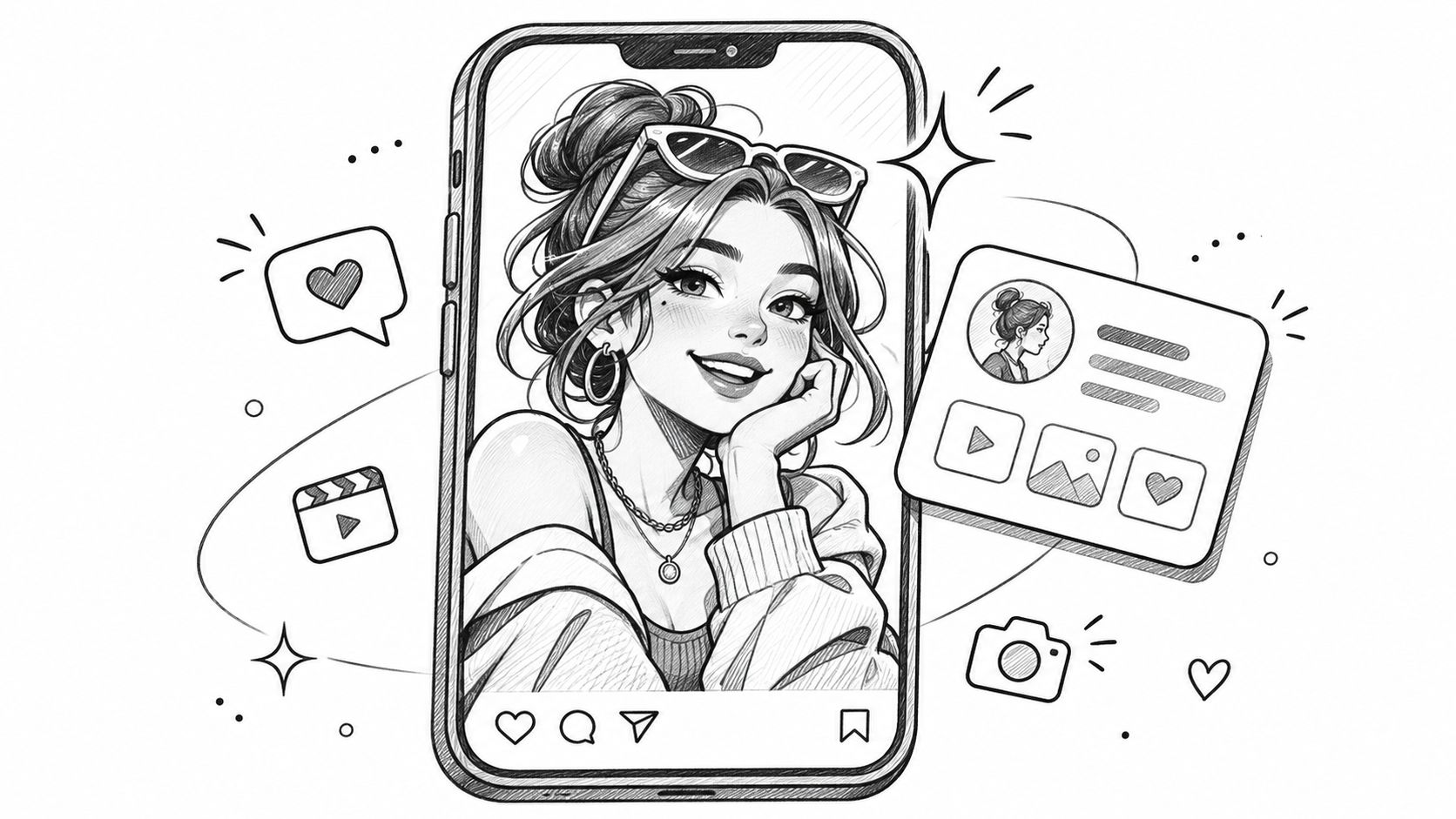
A virtual influencer needs a recognizable persona before it needs polished renders. Lil Miquela, launched by Brud, posts photos, video clips, brand partnerships, and an ongoing storyline. The character is computer-generated, and the audience knows it.
Persona before pixels
Write a persona guide before producing assets. Set the character's voice, opinions, wardrobe rules, posting cadence, and off-limits topics. Then keep the face, lighting, and proportions consistent across posts. Test short vertical clips alongside still images, and compare how the audience responds to each.
Disclosure shapes trust. Business Insider reported that 77% of surveyed U.S. creators said human-made content is becoming a premium in the AI era, and 78% said clear AI disclosure is essential for maintaining trust. The same Business Insider report on AI disclosure among creators found that 49% always or often disclose AI use, while 18% rarely or never do so. Identify the character as AI-generated in the bio and in paid posts.
The trade-off: Producing each asset takes more work than filming with a phone and ring light. Brand campaigns also have to address audience skepticism.
- Label the character: State prominently in the bio that the character is AI-generated.
- Keep the wardrobe consistent: A clear silhouette helps viewers recognize the character at thumbnail size.
- Plan the cadence: A persona needs regular posts to maintain a coherent story.
7. Science and Engineering Creators on YouTube
A science video earns attention by making an unfamiliar idea visible. Mark Rober's engineering challenges show how a clear question and a physical build can carry a full-length video. The format takes time, equipment, and repeated work at the bench.
One question, one payoff
Build each video around one question the viewer can understand quickly. Show the experiment, keep the failures that explain what changed, then reveal the result. Make the thumbnail about the outcome or surprise. Cut a few striking moments into Shorts that point viewers to the full build; use behind-the-scenes footage for a separate upload.
Successful science channels operate as small media businesses. They need a repeatable production workflow, and the build itself has to hold attention from setup through result.
What works: showing a failure makes the solution feel earned. What doesn't: presenting a workshop build as a simple kitchen experiment. Viewers notice when the tools and setup tell a different story.
- Budget the build: price materials before choosing camera gear.
- Film the process: record setbacks and adjustments, not only the finished result.
- Reuse the set: plan several videos around the same workshop setup.
The trade-off is production time. A build can take weeks, and a failed experiment can use up the cycle without producing a finished video. Choose projects that can still teach something if the final result changes.
8. Mass-Scale Challenge and Entertainment Channels
MrBeast turned giveaways and stunts into a production company. Copying the budget is impossible for a solo creator. Copying the packaging is not.
Packaging decides everything
State the premise in a short title a viewer can repeat out loud. Design one thumbnail with a single subject, strong contrast, and a face or object that reads at phone size. Test two or three thumbnail variants before publishing, and treat the first fifteen seconds as a separate product: establish the stakes, show the prize, then start.
The rule that transfers: the video is sold before it plays. A clear premise and a clean thumbnail do more for a small channel than another hour of editing.
- Cut the trailer first: the most striking 15 to 30 seconds becomes your Short.
- Write the title before you shoot: if it doesn't fit on one line, the idea is muddled.
- Score the opening: watch your own first fifteen seconds with the sound off.
The trade-off is capital intensity. This format eats money, needs a crew, and invites imitation within weeks. A creator without a budget can borrow the packaging discipline and leave the stunts alone.

9. Short-Form Clip Repurposing Creators
Alex Hormozi's short clips are cut from long talks and podcast appearances, then published as vertical video with captions. The creator supplies the ideas; the format supplies the distribution.
Cut for the first three seconds
Choose clips where the claim lands immediately. If the setup needs twenty seconds of context, it's the wrong clip. Add burned-in captions for silent viewing, keep the cut between 20 and 60 seconds, and put the full episode link in the caption rather than the video. A podcast channel can publish five to eight clips per episode without recording anything new.
The competition looks fiercer than it is. OpusClip's 2025 dataset, covering accounts active from January through August 2025, found that 72.88% of creators had fewer than 10,000 followers (OpusClip). Most accounts in this space are small, which means consistency and clip selection separate you faster than production polish will.
The trade-off: you're distributing someone else's thinking unless you add framing. Commentary, corrections, and context are what turn a clip channel into a brand rather than a re-upload feed.
- Build a clip bank: tag timestamps while you watch the source.
- Write the caption as a headline: it's the only text many viewers read.
- Publish in batches: five clips from one recording session.
If you want to check what users say about the cutting and captioning tools before you pay, Revid Reviews collects public reviews from Trustpilot, X, and Product Hunt with links to each original.
How the nine digital creator formats compare
| Item | Main platform | Core format | Production effort | Best for |
|---|---|---|---|---|
| Faceless Educational Explainer Channels Built with AI Video Tools | YouTube, TikTok, Instagram | Narrated educational videos with animation and visuals | Moderate; research and editing required | Teaching complex topics without appearing on camera |
| Lo-Fi and Ambient Music Stream Channels | YouTube, Spotify | Long music streams with looping visuals | Low once tracks and visuals are ready | Study, sleep, and focus listening |
| AI-Assisted Music Video Creators for Independent Artists | YouTube, TikTok, Instagram Reels | AI-assisted music videos, lyric videos, and teasers | Moderate; requires visual planning and editing | Independent artists promoting music affordably |
| UGC-Style Creators for Short-Form Video Ads | TikTok, Instagram Reels, Meta | Vertical product videos with hooks and calls to action | Low to moderate; multiple variants may be needed | Brands testing short-form ad creatives |
| Comedy and Silent Skit Creators on TikTok | TikTok | Short visual skits with minimal dialogue | Low; frequent posting helps | Creators seeking shareable, language-neutral comedy |
| Virtual Influencers | Instagram, TikTok | Digital characters posting social content and campaigns | High; requires consistent character production | Brands building a controllable digital persona |
| Science and Engineering Creators on YouTube | YouTube | Experiments, demonstrations, and visual explainers | High; filming and research take time | Making science and engineering engaging |
| Mass-Scale Challenge and Entertainment Channels | YouTube | High-production challenges, stunts, and giveaways | Very high; often requires a team and budget | Creators pursuing large-scale entertainment and audience growth |
| Short-Form Clip Repurposing Creators | TikTok, Instagram Reels, YouTube Shorts | Vertical clips cut from long-form content | Low to moderate; editing and clip selection required | Extending the reach of podcasts, talks, and courses |
Pick one format and test it this month
Choose by skill and budget, not by what's trending. If you can write, the faceless explainer is the most effective start. If you can perform, silent skits cost almost nothing to test. If you can sell, UGC ad work pays fastest. If you already have a catalog, clip repurposing turns old footage into new reach.
Then run a 30-day test on a single format: publish three to five variants, track hook retention, watch time, and completion, keep the variant that holds attention, and rebuild the rest. Don't judge a format on one upload. Judge it on whether the fifth video performs better than the first.
The income reality deserves a plain sentence here. In a 2026 creator-economy report, nearly 69% of creators described their income as unpredictable or inconsistent, and 59% said they want transparent brand pay rates (The Influencer Marketing Factory). Format choice is a hedge against that. A format with two revenue paths (ad share plus digital products, or brand work plus affiliate) survives a bad month better than one that depends on a single platform's algorithm.
Cost discipline matters as much as creative direction. Keep tool spending small until a format pays for itself, watch what each video costs in time rather than in subscription fees, and drop any format that needs more than a week of your attention per upload.
Revid is an AI video generator used by more than 3,000,000 creators, built around short-form output for TikTok, YouTube Shorts, and Instagram Reels. Test it on whichever format you pick, and judge it on the same numbers you'd use for any other production method: retention, completion, and clicks.
If you want to know whether an AI video tool is worth paying for before you commit, Revid Reviews is the place to look. It gathers public reviews of Revid from Trustpilot, X, and Product Hunt, each linked to its original, alongside plain answers on credits, pricing, cancellation, and how the tool compares with other generators. Start with the format you chose above and visit Revid Reviews to check the reviews before you spend.